Social, educational and research expertise come together in the work of five organisations active in the social field from Italy, Greece, the Netherlands and Germany, which form the partnership of LiLI – Life & Language Skills for Migrant Women, a European initiative aimed at promoting inclusion, equal opportunities and the empowerment of migrant women, while fostering their full participation in social and cultural life.
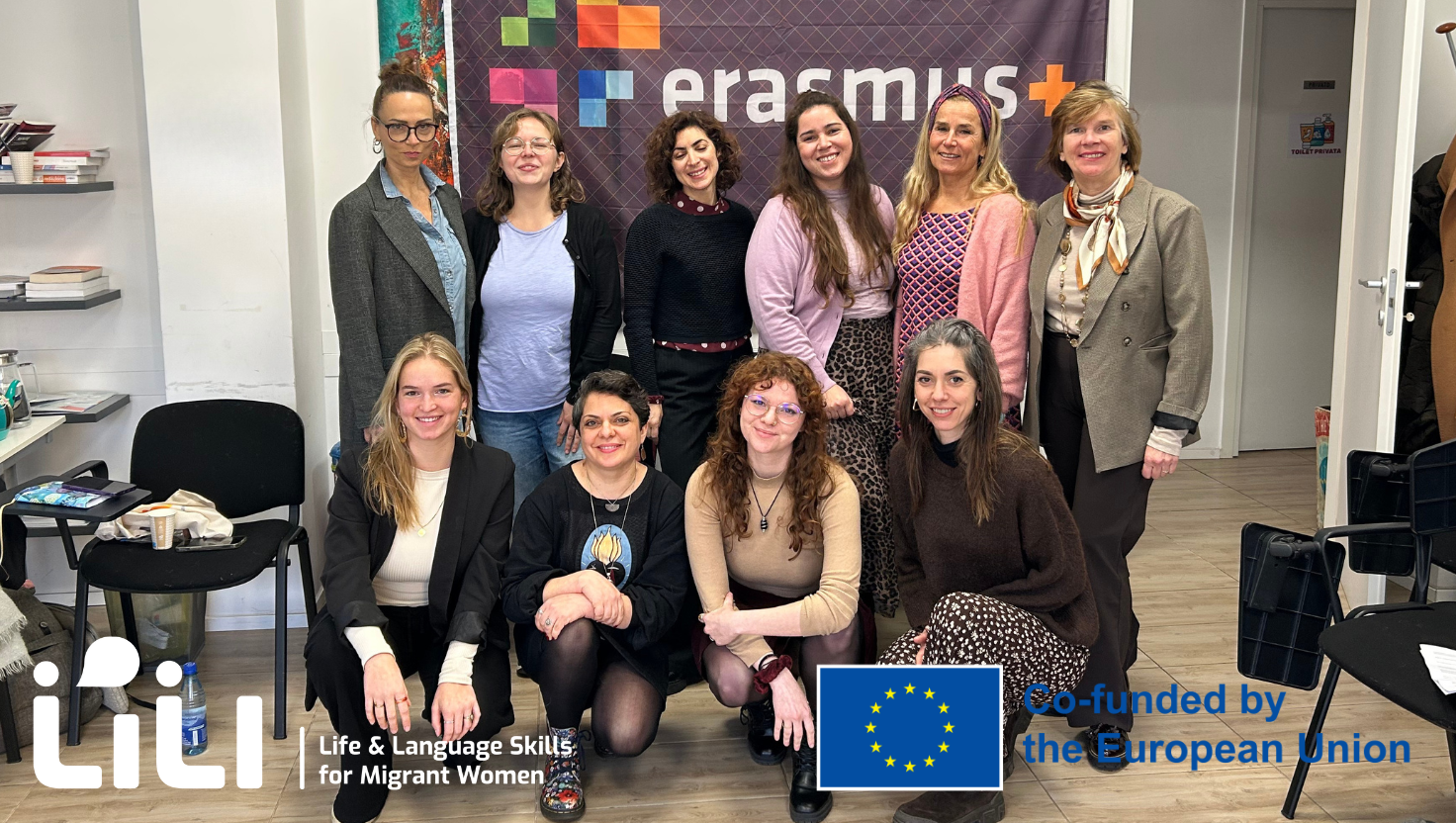
This collaboration enhances complementary roles and expertise in the development of activities, the testing of planned actions and the dissemination of results, strengthening the impact of the initiative at both local and European levels. On 22 and 23 January, the organisations involved met in Rome, at the headquarters of Programma integra, for a moment of exchange and planning focused on defining the initial operational phases and coordinating activities.
Let us take a closer look at the organisations involved in the LiLI initiative:
Programma integra – Project coordinator (Italy)
Programma integra is a social enterprise committed to promoting equal opportunities and building inclusive and cohesive communities, by designing and implementing interventions in support of people in situations of social vulnerability. Its activities are addressed, among others, to migrants, asylum seekers and beneficiaries of international protection, people experiencing homelessness, individuals belonging to ethnic minorities – such as Roma, Sinti and Travellers – and members of the LGBTQI+ community, through reception services, socio-legal assistance, employment guidance, counselling and psychological support, Italian language courses, vocational training, linguistic and cultural mediation, social mediation in the housing sector, as well as support for entrepreneurship. Programma integra also implements initiatives dedicated to children, adolescents and families, managing educational and care spaces, promoting parenting support activities, play-based educational workshops, listening services, and actions aimed at combating early school leaving and educational poverty, while also providing psychological support and supervision for work teams and professionals operating in the socio-educational field. In parallel, the organisation promotes and participates in European and national initiatives aimed at developing and sharing research, strategies and innovative tools in the fields of social inclusion, anti-discrimination, gender issues, human rights and professional skills development. Through consultancy and capacity-building activities, Programma integra strengthens the social system by offering technical support, specialised training and guidance in the design, implementation and reporting of social interventions, with the goal of generating sustainable impact and effective, replicable solutions over time.
Paulon International School – (Italy)
Paulon International School is a school of Italian language and culture addressed to students of all nationalities who wish to develop their linguistic skills through a high-quality learning experience and an authentic immersion in the Italian cultural context. Established in 2015 within the project of the Paolina Paulon Cultural Association, the school initially supported young international musicians and artists, gradually expanding its educational offer. Since 2022, it has been active in the cities of Vicenza and Venice, where it promotes Italian language and culture programmes for international students, companies and local organisations, with long-term specialised courses also dedicated to Chinese students through the Marco Polo and Turandot pathways. The school collaborates with AFAM institutions, artistic and musical institutes and takes part in European and national projects; it is also affiliated with the University of Roma Tre as an examination centre for Italian as a foreign language certification. Educational activities are delivered by a highly qualified team of teachers and tutors specialised in teaching Italian as a second language (L2), who accompany students throughout their learning journey, fostering not only linguistic development but also cultural and personal enrichment through the experience of studying in Italy.
BUPNET – Bildung und Projekt Netzwerk GmbH (Germany)
Founded in 1985, BUPNET is an adult education provider with solid experience in promoting innovation in education and training systems. Through its European department, the organisation actively participates in EU-funded projects as coordinator or partner, contributing to the development and testing of innovative products, the transnational exchange of expertise and the strengthening of institutional networks. BUPNET’s activities cover a wide thematic spectrum, including education and training, employment, social inclusion, health, culture, integration, regional development, research and development, as well as environment and energy. Over the years, the organisation has delivered numerous training programmes in areas such as the social sector, healthcare, economics, tourism, sustainable development and intercultural competences, both at national and European level. Since 2001, BUPNET has also developed its own multilingual e-learning and collaboration platform, used in several European projects and recognised for its innovative approach. With long-standing participation in EU programmes such as Adapt, Socrates, LIFE+, Interreg, Grundtvig, Leonardo da Vinci and Joint Actions, BUPNET brings to LiLI extensive expertise in educational design, blended learning methodologies and digital solutions for training.
Stichting Netwerkpro – (Netherlands)
Founded in 2015, Stichting Netwerkpro is a foundation active at national and international level with the aim of supporting the creation of an autonomous future for women, with particular attention to migrant women. Its mission is to promote empowerment, social cohesion and sustainable integration through innovative methodologies that combine training, mentoring and work experience. Since 2015, Netwerkpro has guided over 2,100 women through pathways of activation, participation and professional integration, developing modular programmes lasting 4–6 months and tailored to the needs of different participant groups. The pathways include an initial group-based empowerment training phase, focused on soft skills, goals and the enhancement of personal competences, which gradually evolves into training oriented towards professional skill development. Work within multicultural peer groups creates safe spaces for exchange and mutual support, fostering long-lasting relationships and a strong sense of belonging; many former participants subsequently become ambassadors, group coordinators or mentors. Netwerkpro works closely with local employers to co-design internship and training pathways aimed at employment or the launch of entrepreneurial activities, in high-demand sectors such as healthcare, childcare, retail and services. Activities are delivered by a core team supported by certified trainers, local coordinators and a wide network of volunteer mentors, in constant collaboration with municipalities and European partners.
KMOP – Education & Innovation Hub (Greece)
Founded in 1977, KMOP is one of the oldest civil society organisations in Greece, with extensive experience in the provision of social services and the implementation of social impact initiatives. Over the years, it has established a strong international presence and is now active in seven European countries, with permanent offices in Athens, Thessaloniki, Brussels and Skopje. KMOP works to promote individual and collective well-being, reduce inequalities and strengthen social cohesion through research, evidence-based policy design and the development of innovative educational and social initiatives. Within this framework, KMOP Education & Innovation Hub focuses in particular on promoting social progress through innovative learning and research, with a strong emphasis on inclusive education and digital transformation. The organisation has solid experience in designing and delivering adult education interventions, especially for vulnerable groups such as migrant women, developing methodologies that integrate microlearning approaches, Content and Language Integrated Learning (CLIL) and accessible digital tools. KMOP also contributes to the development of training materials on digital skills, social inclusion and active citizenship, promoting an intersectional approach to educational design and collaborating with academic institutions and civil society organisations at international level.
A partnership for impact
The strength of LiLI lies in the structured collaboration among organisations that, while operating in different geographical contexts and sectors, share deep experience in working with people in situations of vulnerability and a common commitment to inclusion and equal opportunities. The social, educational, training and research competences brought together by the organisations involved make it possible to develop an integrated approach that combines local interventions, methodological innovation and high-quality educational tools. This synergy enables a concrete and sustainable response to the needs of migrant women, enhancing their skills, potential and pathways to autonomy, while simultaneously strengthening the capacities of professionals and organisations working alongside them. The partnership thus represents one of the core elements of the initiative, ensuring quality, innovation and a lasting perspective of change at both local and European levels.
Follow updates and activities of LiLI on Facabook and Instagram