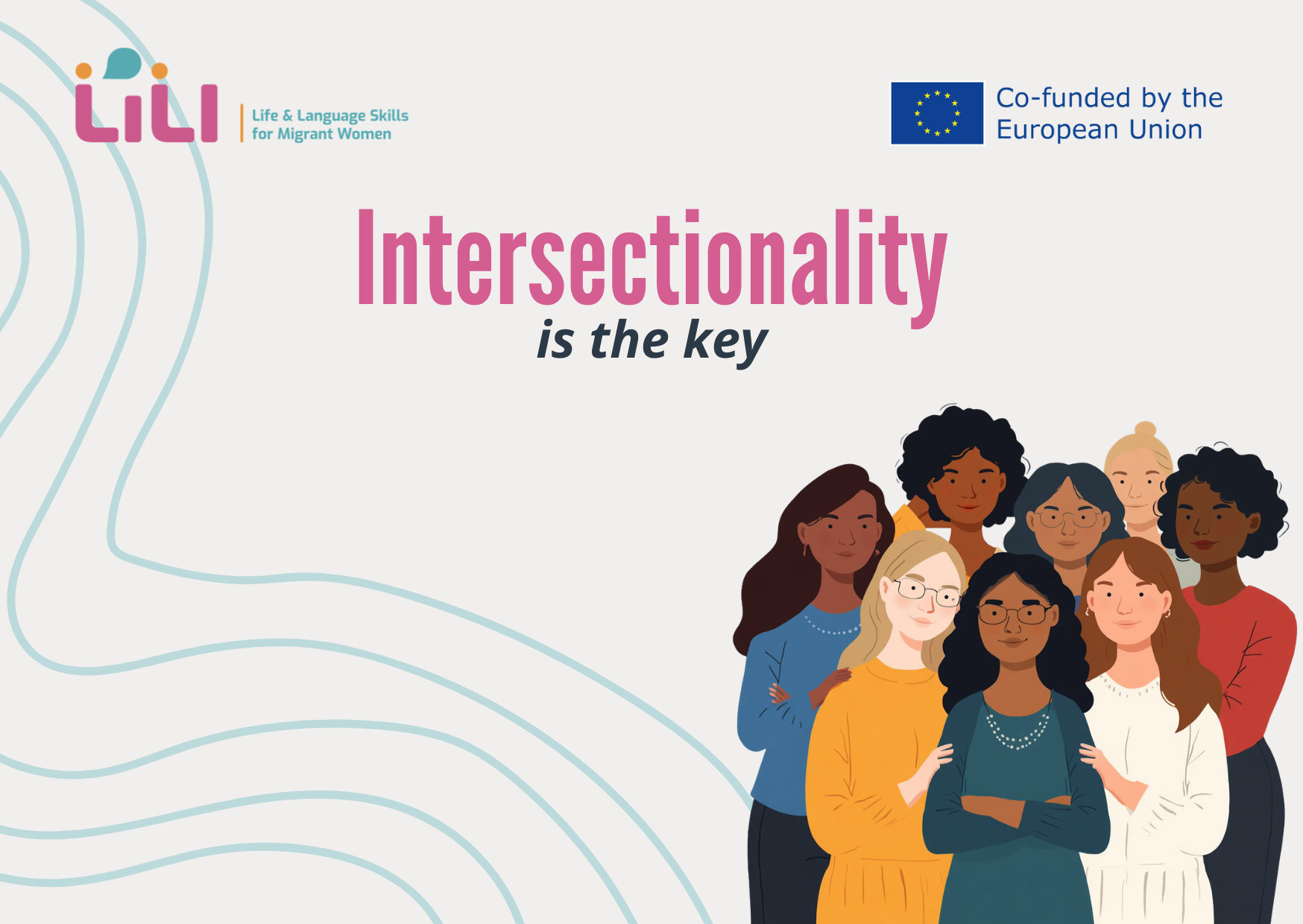
Intersectionality and its role in the inclusion pathways of migrant women are at the heart of LiLI – Life and Language Skills + Intersectionality for Migrant Women Integration. Through a series of informative articles, the project has, from its very first months of activity, launched an in-depth exploration of this crucial topic. The aim is to better understand how different forms of discrimination and vulnerability can intersect, affecting migrant women’s opportunities for participation and integration, and to identify and promote effective strategies, tools, and resources that support fairer and more inclusive pathways.
But what exactly does “intersectionality” mean, and why is it such an important concept when discussing migration, integration, and equal opportunities?
Intersectionality helps us understand how different factors—including gender, origin, age, legal status, economic situation, and educational background—can interact with one another, shaping each person’s experience in unique ways and often resulting in multiple forms of discrimination or exclusion. For this reason, adopting an intersectional perspective is essential for designing policies, services, and interventions that are truly inclusive and capable of responding to the complexity of people’s needs.
This article explores the origins of the concept of intersectionality and examines its significance in the context of migration and social inclusion.
What Is Intersectionality?
The term was introduced by American legal scholar Kimberlé Crenshaw to describe how different aspects of identity—such as gender, ethnicity, age, economic status, or educational level—can interact and create specific experiences of disadvantage or exclusion.
Applying an intersectional perspective means recognizing that there is no single migrant experience and that the challenges people face can vary greatly depending on their individual circumstances. In the case of migrant women, for example, difficulties related to language learning or access to employment may intersect with family responsibilities, gender stereotypes, social isolation, or limited educational opportunities. Every integration journey is shaped by a range of factors that often overlap.
Gender
Migrant women may face specific barriers linked to gender roles, the unequal distribution of caregiving responsibilities, and limited opportunities to participate in social and working life. Managing family and childcare responsibilities, for example, can reduce the time available to attend language courses or vocational training activities.
Origin and Cultural Background
Migration experiences vary significantly depending on the country of origin, the reasons for migration, and the circumstances experienced before arriving in the host country. Those who have faced conflict, persecution, or long migration journeys may have different needs compared to other migrants.
Age
Age is another factor that influences the integration process. Younger women may face challenges related to access to education or employment, while older women may encounter greater difficulties in language learning or adapting to new social and professional environments.
Educational Background
Previous skills and educational pathways have a significant impact on inclusion opportunities. Some women hold advanced professional qualifications that are not recognized in their country of arrival, while others may have had limited access to education and therefore require more structured learning pathways.
Family Situation
The presence of children, the availability of support networks, and caregiving responsibilities can affect the ability to participate in educational, professional, and social activities. The lack of adequate support services may become an additional barrier to inclusion.
Why Is It Important to Personalize Learning Pathways?
Recognizing the diversity of experiences means moving beyond standardized approaches that offer the same solutions to everyone. A truly inclusive pathway must start by listening to individual needs and adapting content, methodologies, and tools to the characteristics of the people involved.
In the field of adult education, this means developing programmes that combine language learning, life skills development, and support for personal autonomy, while taking into account different starting conditions. Personalization is not only a more effective educational strategy but also a fundamental tool for promoting equal opportunities and social participation.
Towards Fairer Inclusion
Adopting an intersectional perspective means viewing people in all their complexity and recognizing that every integration pathway is influenced by multiple interconnected factors.
For migrant women, this approach can help make educational pathways more accessible, relevant, and effective, fostering not only the acquisition of linguistic and professional skills but also greater autonomy and participation in community life.
Building inclusive societies means valuing diversity and creating opportunities that respond to people’s real needs, ensuring that no one is left behind.
LiLI – Life and Language Skills + Intersectionality for Migrant Women Integration is a European project coordinated by Programma integra and funded by the Erasmus+ Programme. The project places the promotion of migrant women’s socio-economic inclusion at the centre of its activities, providing tools for language learning and life skills development through the dissemination of intersectional approaches.
To learn more, follow our social media pages: Facebook, Instagram.